World No Tobacco Day (31 May): Impact, History & Tips to Quit (विश्व तंबाकू निषेध दिवस)

Key Takeaway

World No Tobacco Day is observed globally on May 31 by the WHO to raise awareness about the devastating health and environmental consequences of tobacco use. In India alone, over 1 million people die annually from tobacco-related diseases like cancer, COPD, and heart disease. Beyond health, tobacco farming destroys 3.5 million hectares of land and causes massive deforestation. Quitting tobacco is possible through Nicotine Replacement Therapy, behavioral distraction, exercise, and stress management techniques.
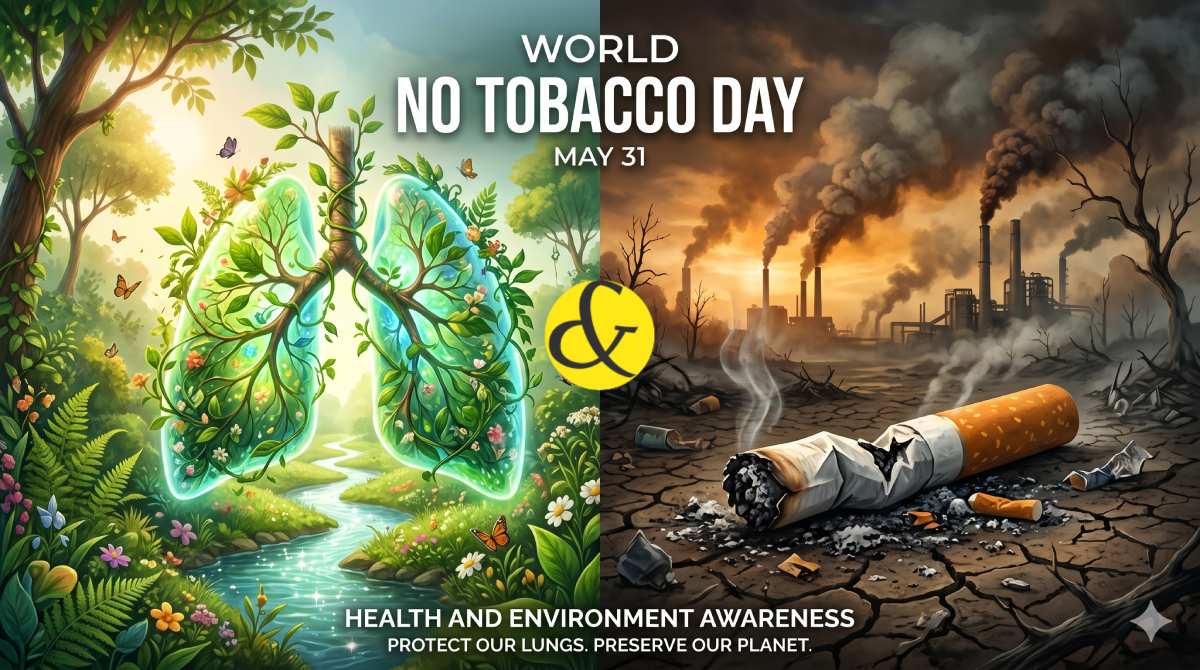
| A conceptual illustration of World No Tobacco Day showing  |

🚭 World No Tobacco Day: Say NO to Tobacco

विश्व तंबाकू निषेध दिवस: 31 मई — Protect your health, protect the environment.

The World Health Organization (WHO) observes May 31 as World No Tobacco Day (विश्व तंबाकू निषेध दिवस) globally. Tobacco consumption increases the risk of at least 15 types of cancer, heart diseases, and various lung disorders. तंबाकू का सेवन कई तरीकों से किया जा सकता है; जैसे सिगरेट (cigarettes), तंबाकू चबाना (chewing tobacco), हुक्का (hookah), और सिगार। इनमें से धूम्रपान (smoking) सबसे आम तरीका है।
🚨 Did You Know? According to the WHO, 12% of the world's smokers live in India. भारत में हर साल 10 लाख (1 Million) से अधिक लोग तंबाकू से संबंधित बीमारियों के कारण मरते हैं।

🌍 Significance & Food Security (महत्व)

Globally, tobacco is cultivated on approximately 3.5 million hectares of land every year. तंबाकू की खेती के कारण होने वाली वार्षिक वनों की कटाई (deforestation) का अनुमान 2 लाख हेक्टेयर है। Tobacco production has a devastating impact on the ecosystem because tobacco fields are highly prone to desertification (मरुस्थलीकरण) compared to other agricultural activities like maize farming.

इसके अलावा, तंबाकू की खेती में रासायनिक उर्वरकों (chemical fertilizers) और कीटनाशकों का भारी उपयोग होता है, जिससे मिट्टी की उर्वरता कम हो जाती है। If tobacco continues to be grown as a commercial crop, sustainable food production in poor and middle-income countries could be severely threatened.

🏛️ History of WNTD (इतिहास)

In 1987, the member states of the World Health Organization created "World No Tobacco Day" to draw global attention to the tobacco epidemic and the preventable death and disease it causes. विश्व स्वास्थ्य सभा ने 1987 में 7 अप्रैल, 1988 को "विश्व धूम्रपान निषेध दिवस" घोषित किया था। Later, in 1988, Resolution WHA42.19 was passed, officially designating May 31 as World No Tobacco Day.

⚠️ The Devastating Impacts (विनाशकारी प्रभाव)

🩺 Health Impacts (स्वास्थ्य)

तंबाकू का सेवन निम्नलिखित घातक बीमारियों का कारण बन सकता है:

  • Cancers: Digestive system cancers (GERD, pancreas, stomach, mouth, liver, colon).
  • Neurological: Strokes, Small Vessel Ischemic Disease (SVID), and Vascular Dementia.
  • Heart & Lung: Heart disease (हृदय रोग) and Chronic Obstructive Pulmonary Disease (COPD).
  • Others: Tuberculosis (यक्ष्मा), Diabetes, and severe eye diseases.

🌱 Environmental Impacts (पर्यावरण)

तंबाकू पर्यावरण को कैसे प्रभावित कर रहा है:

  • Land Loss: 3.5 million hectares of land destroyed annually.
  • Deforestation: 200,000 hectares of forests cleared every year.
  • Littering: 4.5 trillion (45 लाख करोड़) cigarette butts are improperly disposed of globally.
  • Toxicity: Generates 800 million kg of toxic waste and releases thousands of chemicals into air, water, and soil.

🎯 Main Objectives (मुख्य उद्देश्य)

  • Spreading Awareness: Educating users about the entire lifecycle of tobacco—from cultivation to waste management—and giving them strong reasons to quit.
  • Ending Mortality: Reducing the diseases and deaths caused by smoking and tobacco chewing (तंबाकू और धूम्रपान के सेवन से होने वाली बीमारियों को समाप्त करना).
  • Exposing Deception: Highlighting the greenwashing and deceptive marketing tactics used by tobacco companies.
  • Policy Advocacy: Urging governments to create strict guidelines and hold tobacco producers accountable for environmental damage.


🛑 Tips to Quit Smoking (धूम्रपान से परहेज करने के टिप्स)

Quitting tobacco is a challenging but life-saving journey. निम्नलिखित कारक धूम्रपान छोड़ने में सहायक हो सकते हैं:

  • Nicotine Replacement Therapy: Consult a doctor about using patches or gums to manage cravings (निकोटीन प्रतिस्थापन चिकित्सा का उपयोग करना).
  • Avoid Triggers: Stay away from places like bars or specific social circles where the temptation to smoke is high.
  • Oral Distractions: Chew sugarless gum or hard candy to fight the urge to use tobacco (बिना चीनी वाला च्युइंग गम या कैंडी चबाना).
  • Change the Environment: Distract yourself and immediately move to a smoke-free zone when a craving hits.
  • Daily Exercise: Physical activity reduces nicotine cravings and withdrawal symptoms (दैनिक व्यायाम).
  • Stress Management: Try alternative relaxation techniques like deep breathing, muscle relaxation, yoga, and listening to music (तनाव कम करने के लिए योग और संगीत).

Frequently Asked Questions

Why is World No Tobacco Day celebrated on May 31? (विश्व तंबाकू निषेध दिवस 31 मई को क्यों मनाया जाता है?)
In 1987, the WHO initially established "World No-Smoking Day" on April 7. However, to give the initiative a distinct global identity, the World Health Assembly passed resolution WHA42.19 in 1988, officially designating May 31 as World No Tobacco Day to raise global awareness about the severe health and environmental impacts of tobacco.
How does tobacco cultivation affect the environment? (तंबाकू की खेती पर्यावरण को कैसे प्रभावित करती है?)
Tobacco farming is highly destructive. Globally, it destroys about 3.5 million hectares of land and causes 200,000 hectares of deforestation annually (वनों की कटाई). Additionally, it generates 800 million kg of toxic waste and involves the heavy use of chemical fertilizers, which depletes soil fertility and water resources.
Can smoking cause digestive and neurological problems? (क्या धूम्रपान से पाचन और तंत्रिका संबंधी समस्याएं हो सकती हैं?)
Yes, absolutely. Beyond lung cancer, tobacco consumption increases the risk of digestive system cancers (pancreas, stomach, mouth, liver, colon) and issues like GERD. It also severely impacts the nervous system, leading to strokes, small vessel ischemic disease (SVID), and vascular dementia.
What is the main objective of World No Tobacco Day? (WNTD का मुख्य उद्देश्य क्या है?)
The primary goal is to educate the public about the deadly diseases caused by tobacco and to expose the deceptive practices of tobacco companies. It also aims to urge governments and policymakers to implement stricter guidelines (सख्त नीति और दिशानिर्देश) and hold tobacco producers accountable for both health crises and environmental degradation.
What are the best tips to quit smoking? (धूम्रपान छोड़ने के सबसे अच्छे तरीके क्या हैं?)
Quitting requires patience and strategy. Effective methods include using Nicotine Replacement Therapy (NRT), avoiding trigger environments like bars, chewing sugarless gum to beat cravings (तंबाकू की तलब को रोकने के लिए), engaging in daily exercise (दैनिक व्यायाम), and practicing stress-relief techniques like deep breathing and yoga.

Book Your Personal Consultation

Fill out the form below to connect with our expert astrologers. Your information is 100% confidential.