Astrology Is For Everyone: Learning the Ancient Vidya, Gurukul Months & Practical Memory Anchors
 AstroAnanta Team
November 20, 2025
5 Min Read
171
AstroAnanta Team
November 20, 2025
5 Min Read
171
Astrology Is For Everyone — The Vidya Our Ancestors Gave Us
Short intro: Astrology (jyotish) is not just a profession; it’s an ancient vidya that guided daily life, festivals, farming, learning and rites in our gurukuls. Learning basic astrology helps connect seasons, months and life's practical rhythms — and gives tools for timing, discipline and memory.
Why everyone could — and should — learn basic astrology
In traditional gurukul systems, basic astrological knowledge was part of public education. It helped communities plan crops, choose festival dates, and decide auspicious times for marriages, travels and ceremonies. Today, the same knowledge can help you:
- Understand natural cycles (seasons, festivals, harvests).
- Use simple timing to improve outcomes (interviews, negotiations, market focus).
- Build memory through cultural anchors (month names, weekdays tied to planets).
- Grow personal discipline: rituals and small daily practices change habit patterns.
Memory anchors our teachers used — and why they worked
You mentioned remembering school days when months were taught in Hindi (Chaitra, Vaishakha, Jyeshtha). That’s exactly the point: naming connects you to rhythms. A few key anchors:
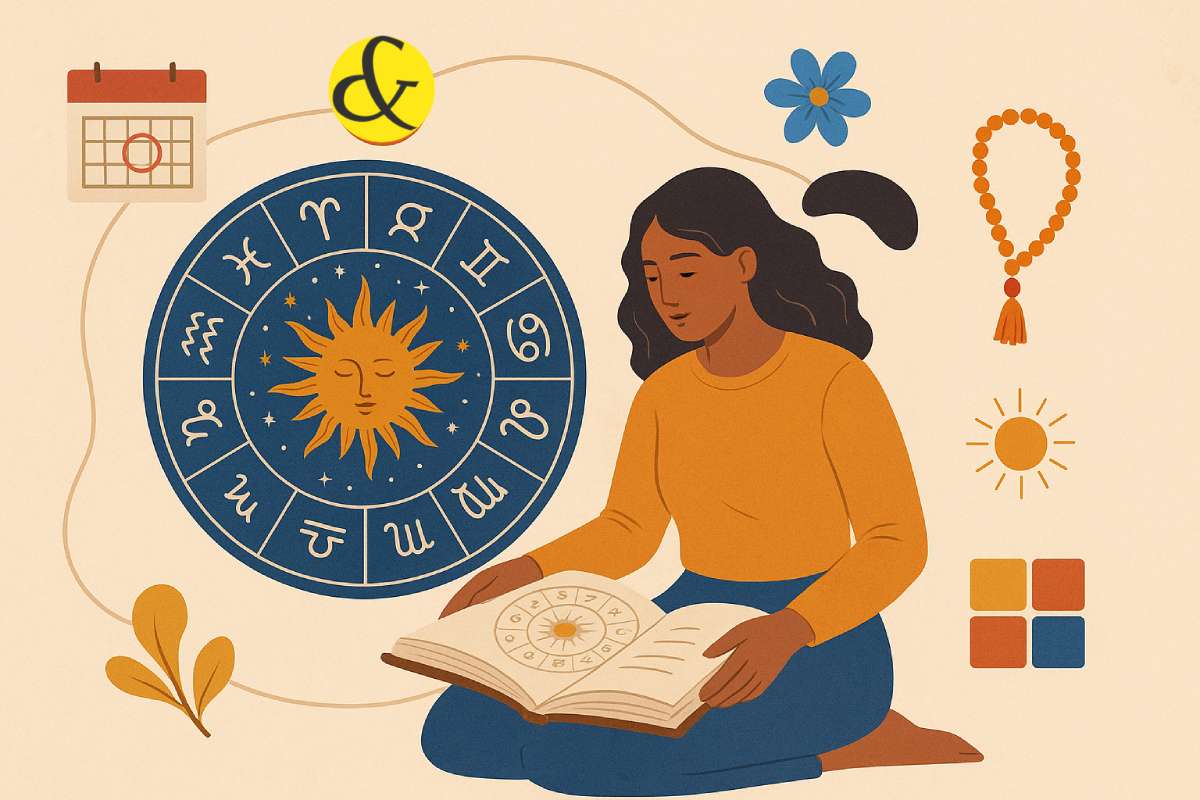
- Months (Chaitra, Vaishakha, Jyeshtha…) — link seasonal changes to festivals and social duties.
- Weekdays (Somvar, Mangalvar…) — each associated with a planet; these helped set simple rules (e.g., Monday practices for Moon-related remedies).
- Colours & clothes — wearing certain colours for certain days or tasks creates a conditioned mindset (you already experience this: light blue for interviews).
- Ritual objects (mala, tilak, rudraksha) — tactile anchors that steady the mind and signal intent to yourself and others.
How learning connects the dots
When you begin studying jyotish, disconnected facts slowly form into a map: planetary qualities explain weekdays and colours; nakshatras explain festivals and personality traits; mahadashas explain long-term trends. This is not mystical — it’s pattern recognition applied to cultural cycles.
Practical tips to start learning (and remembering) astrology
- Use traditional names: Learn the Hindi month names and the weekdays with their planetary links — say them aloud; they stick faster than English names.
- Create small rituals: Apply a tiny morning habit (a saffron tilak, a minute of silence) tied to a planet you study that week.
- Use colour-coding: Mark your study notes with planetary colours (white for Moon, red for Mars, green for Mercury etc.).
- Record patterns: Keep a short daily journal — note mood, clothes, events and the weekday; after weeks you’ll see correlations that teach faster than theory alone.
- Learn with stories: Mythology ties planets to deities (e.g., Shani stories for Saturn). Stories make planetary characters memorable.
- Start with lived examples: Use your own life — your ‘light-blue interview’ is a perfect case study. Track it, test it, repeat intentionally.
Mythological perspective (short)
Our myths personify planets and events so memory and morals travel together. The guru-disciple relationship in stories links Jupiter to wisdom; the Moon’s cycles are woven into tales of change and emotion. These narratives made astrology practical for everyday people, not just specialists.
Common beginner mistakes (and how to avoid them)
- Trying to memorize isolated rules — instead focus on patterns and lived experiments.
- Believing every correlation is causal — test small practices before codifying them as rules.
- Using gemstones or remedies without context — consult a teacher when unsure.
Short takeaway
Astrology was meant to be a public, useful vidya. Start small: relearn month names, tie weekdays to simple rituals, use colours and a short journal. Over time the dots connect — and the vidya becomes a practical tool for timing, memory and mindful action.
हिन्दी में लेख
अस्ट्रोलॉजी (ज्योतिष) सबके लिये है — हमारे गुरुकुल की विद्या
ज्योतिष केवल भविष्य बताने का पेशा नहीं है; यह एक विद्या है जो हमारे पूर्वजों ने समग्र जीवन के लिये सिखाई थी। गुरुकुलों में मास, ऋतु और त्योहारों के नामों से जुड़कर लोग समय की धारा को समझते थे। यह विद्या आज भी जीवन चलाने के सरल उपाय देती है।
क्यों हर कोई इसे सीख सकता/सकती है
- मास और ऋतुओं से त्योहार व खेती का समय जुड़ा रहता है।
- सप्ताह के नाम (सोमवार, मंगलवार…) ग्रहों से जुड़े होते हैं और रोज़मर्रा के नियम बनाने में मदद करते हैं।
- रंग, माला और तिलक जैसे छोटे-छोटे कर्म स्मृति को मज़बूत करते हैं और अभ्यास सरल बनाते हैं।
शुरूआत के व्यावहारिक सुझाव
- हिंदी मासों के नाम (चैत्र, वैशाख, ज्येष्ठ …) याद करें और उनसे ऋतुओं को जोड़ें।
- सप्ताह के दिन और ग्रह (सोम-चंद्र, मंगल-मंगल) मिलाकर छोटी आदत बनाएं।
- रंग कोडिंग और दैनिक जर्नल रखें — अनुभव से सीखना सबसे तेज़ होता है।
- कहानियों (पौराणिक कथाओं) से ग्रहों के चरित्र याद रखें — इससे नियम स्मृति में टिकते हैं।
निष्कर्ष
ज्योतिष एक सार्वजनिक विद्या रही है। छोटी-छोटी आदतें, नाम और कहानियाँ अपनाकर आप भी इसे सीख सकते हैं — और यह आपकी दैनिक निर्णय क्षमता, स्मृति और समयबद्धता में मदद करेगा।